

College merch gets expensive fast. That is exactly why chasing the absolute lowest price is a rookie move.
“College apparel cheap” should mean smart cheap. Buy the hoodie that still looks good after midterms, the tee you would wear off campus, and the hat that feels official instead of suspiciously close. If a piece is flimsy, badly printed, or obviously off-brand, it is not a deal. It is clutter.
The better approach is stricter and more stylish. Spend less by buying fewer pieces, choosing officially licensed gear that looks current, and skipping anything that screams clearance-bin souvenir. Good budget college apparel exists. You just have to shop with standards.
Table of Contents
Why Most "Cheap" College Gear Is a Trap

Most bad college merch makes the same mistake. It wins on price and loses everywhere else.
Students looking for cheap gear say the same thing over and over in this discussion about where to buy cute college merch. The low-cost options are often basic, not especially cute, and force a trade-off between affordability and style. That’s the trap. A shirt can be inexpensive and still feel unwearable.
Cheap isn't the same as worth buying
A bargain tee becomes expensive fast when it sits in a drawer. The usual offenders are easy to spot:
-
Boxy fit: Unisex cuts can work, but a lot of budget tees hang stiff through the shoulders and torso.
-
Weak graphics: Logos that look slightly off, too shiny, or oddly placed usually signal lower effort and lower appeal.
-
Thin fabric feel: If the shirt feels limp on the hanger, it rarely improves after washing.
-
Questionable branding: If the school mark looks unofficial, the piece can read more flea market than campus style.
The goal isn't to spend the least. The goal is to spend once on something that still looks good after repeated wear.
The hidden cost of bad cheap
Low-price college apparel often asks the shopper to accept one of three compromises: style, durability, or legitimacy. Sometimes it’s all three.
Officially licensed gear usually looks cleaner because the branding standards are tighter. Resale and thrift finds can be great, but they’re inconsistent. Random discount merch can be fine for a one-off spirit day, but it often misses the mark for anyone who wants a polished campus look.
What smart cheap actually looks like
“Smart cheap” means the piece checks four boxes:
-
It fits well enough to style easily.
-
It uses school branding that looks intentional.
-
It feels durable enough for repeat wear.
-
It still makes sense at the price.
That last point matters. A slightly higher price for a flattering sweatshirt that gets worn all semester beats a rock-bottom tee that never leaves the laundry pile. For college apparel cheap, the savvy move is finding gear that doesn’t look cheap.
Master the Official Store Without Overpaying
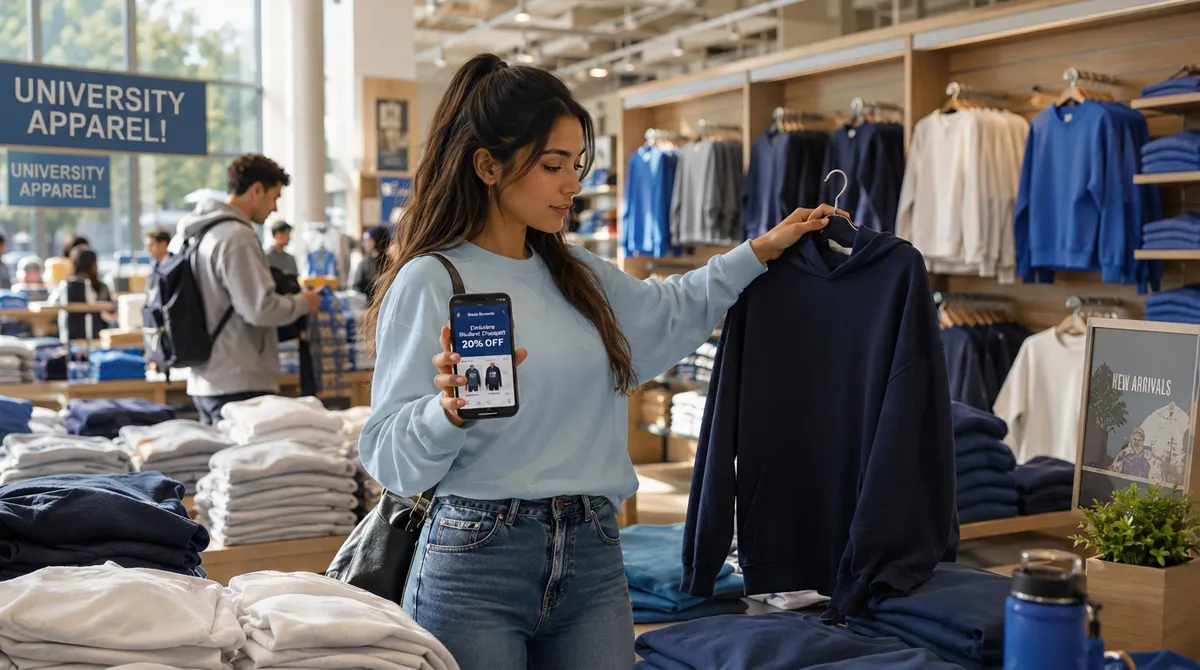
Official stores charge enough to scare off budget shoppers. Fair. They still beat a lot of cheap merch sellers on one thing that matters. The gear usually looks more polished, more current, and more legitimate.
As noted earlier, families are feeling the squeeze on college-related spending. That makes random bookstore browsing a bad move. The smart move is using the official store for the pieces it does best, then refusing to pay full price unless the item is unusually versatile.
Shop the official store with a system
Walk in with rules or the store will win.
Start in clearance, last chance, or end-of-season sections. Ignore the front table. New arrivals are where schools park the highest-margin pieces, and a lot of them are loud, trendy, and overpriced.
Then get picky. Open three or four tabs, or carry a few options around the store, and compare them like you mean it. Look at logo size, color, sleeve length, and whether the piece would still work with your regular jeans, cargos, or sneakers. If it only makes sense with face paint and a stadium seat, it is not worth bookstore pricing.
A few moves save real money:
-
Check for student, alumni, or first-order discounts: Official stores hide these more often than they advertise them.
-
Join email and text alerts: Promo codes usually hit subscribers first.
-
Shop right after major campus events: Big game weekends and orientation pushes often lead to markdowns on leftover inventory.
-
Leave items in your cart: Some stores send a follow-up code. If they do not, you lost nothing.
What is actually worth buying there
The bookstore should supply your foundation pieces, not your whole wardrobe.
| Category | Worth it? | Why |
|---|---|---|
| Sweatshirts and hoodies | Yes | This is where official gear usually looks the cleanest and most elevated |
| Hats and caps | Usually | Small branding is easier to style and rarely feels overdone |
| Trend-driven novelty items | No | These look dated fast and almost never earn their price |
| Basic tees | Sometimes | Buy only if the cut, fabric, and graphic feel noticeably better than cheaper options |
That last row matters. A basic tee from the official store has to clear a higher bar. If it fits like a box and carries a giant generic logo, skip it. You can find better cheap options elsewhere. If it has a flattering cut, restrained branding, and a color you will wear, then it earns a spot.
Avoid the overpriced pick
The easiest mistake is buying the piece that screams school spirit and then sits in a drawer.
Skip all-over prints, glitter-heavy graphics, oversized mascot art, and giant chest logos unless the discount is steep. Those pieces are hard to style off campus, hard to layer, and easy to regret. Clean branding wins because it gives you more wears per dollar.
Official-store rule: Buy the item that works beyond game day. If it cannot leave campus, the price needs to drop.
Use the bookstore for style, not just school spirit
The best cheap college apparel does not look cheap, and it does not look like a giveaway tee either. That is where the official store can help, if you shop with discipline.
One sharp crewneck. One good hat. One tee with clean branding and a solid fit. That is enough. Build around those pieces with the basics you already own, and your college gear will read stylish instead of obligatory.
How to Spot Quality That Lasts
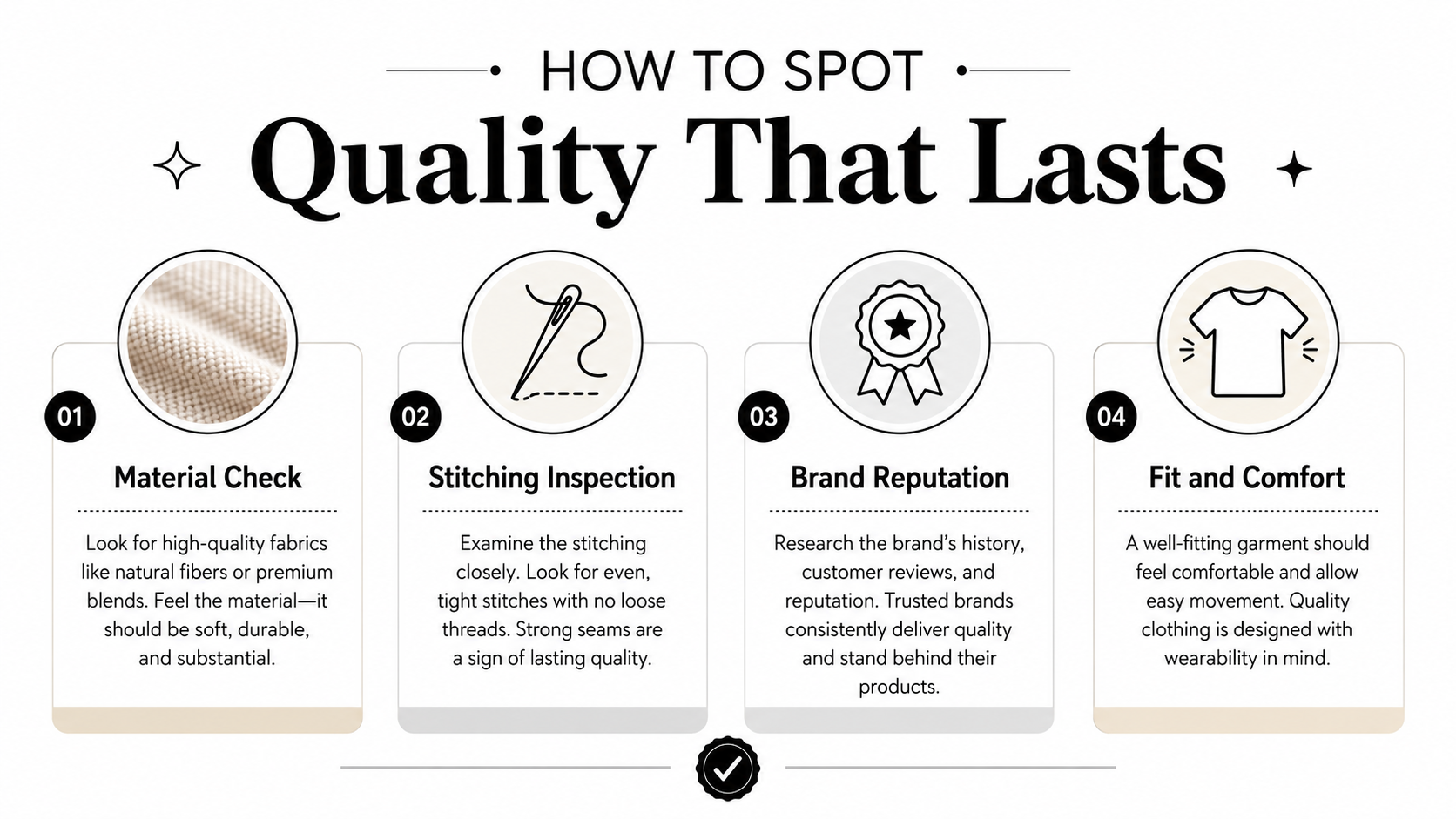
Most shoppers judge college merch by color and logo first. That’s backward. Quality starts with construction.
Professionals use a tech pack to define exactly how a garment should be made, and Pietra’s explanation of tech packs notes that they include details such as fabric weight in GSM, trims, grading rules, and material and labor estimates. A standard T-shirt tech pack commonly needs 15 to 20 measurements, which tells a shopper something important. Good apparel isn’t vague.
Start with fabric and weight
GSM means grams per square meter. Shoppers don’t need to memorize manufacturing language, but they should respect what it signals. If a product page lists fabric details clearly, that’s a good sign. If it says almost nothing, that’s not confidence-inspiring.
When shopping in person, fabric quality shows up fast:
-
Surface feel: Smooth and stable usually beats flimsy and papery.
-
Recovery: Gently stretch the fabric. If it snaps back cleanly, that’s better than a shirt that stays warped.
-
Opacity: Hold lighter-colored fabric up to the light. If it looks overly sheer, expect less structure.
Inspect the make, not just the print
A decent graphic can hide weak construction for about five minutes.
Check these details before buying:
-
Seams: Side seams should look straight, not twisted.
-
Collar shape: A ribbed collar should lie flat and feel secure, not wavy.
-
Stitch consistency: Loose threads happen, but uneven stitching across major seams is a warning.
-
Hem finish: A clean hem usually signals better overall care in production.
A shirt doesn’t need luxury construction to be a smart buy. It does need to survive washing, movement, and repeat wear without losing shape.
Read the print with a colder eye
Graphics matter, but not every print method ages the same way. A shopper doesn’t need factory-level knowledge to spot likely problems.
Look for signs such as:
-
Overly plastic shine: Can feel stiff and look cheaper.
-
Cracking at the fold line: A bad sign before the first wash.
-
Tiny details packed into a low-cost tee: More room for visual mess and wear issues.
The online shopping shortcut
When buying online, the product page should answer basic questions without forcing detective work. Fabric composition, close-up photos, fit notes, and multiple angles all help. If the listing hides those details, the shopper is being asked to trust too much.
For college apparel cheap, quality isn’t about perfection. It’s about avoiding the obvious misses and choosing pieces built with enough care to last past one semester.
Finding Hidden Gems Beyond the Bookstore
The collegiate apparel market is big enough to support far more than campus stores. One market report valued the global category at $7.2 billion in 2025, with T-shirts and basic apparel accounting for 28.5% of revenue, according to Market Intelo’s collegiate apparel market report. That scale explains why shoppers can find school gear through third-party retailers, resale apps, and discount channels instead of relying on one bookstore rack.
Where each option wins
Different sources solve different problems. Smart shoppers stop expecting one store to do everything.
-
Licensed third-party fashion retailers: Best for cleaner styling, trend-aware cuts, and pieces that feel more wearable off campus.
-
Resale platforms: Best for vintage sweatshirts, older logos, and one-off finds with personality.
-
Discount chains and general retailers: Best for basic spirit wear when the shopper needs something fast and cheap.
A shopper building outfits instead of just collecting logos will usually get better results by mixing sources. That’s where campus-inspired street style outfits become useful as a styling reference, because the strongest looks rarely rely on one matching merch set.
What to check before buying elsewhere
Third-party and resale shopping can save money, but it needs a stricter filter.
| Source | Main upside | Main risk |
|---|---|---|
| Licensed fashion retailer | Better design point of view | Higher chance of paying for style over versatility |
| Resale app | Unique older pieces | Inconsistent condition and sizing |
| Thrift store | Low cost and surprise finds | Very limited school and size selection |
| Big-box retailer | Easy access | Generic graphics and weaker fit |
The hidden-gem rule
The best non-bookstore pieces usually have one standout trait, not five. Maybe it’s a vintage wash. Maybe it’s a cropped fit. Maybe it’s a cleaner logo than the official version. If a piece is trying to do everything at once, it often ends up looking messy.
Cheap college gear gets better when the shopper gets pickier. Outside the bookstore, that pickiness matters even more.
Build a Versatile Game Day Wardrobe on a Budget
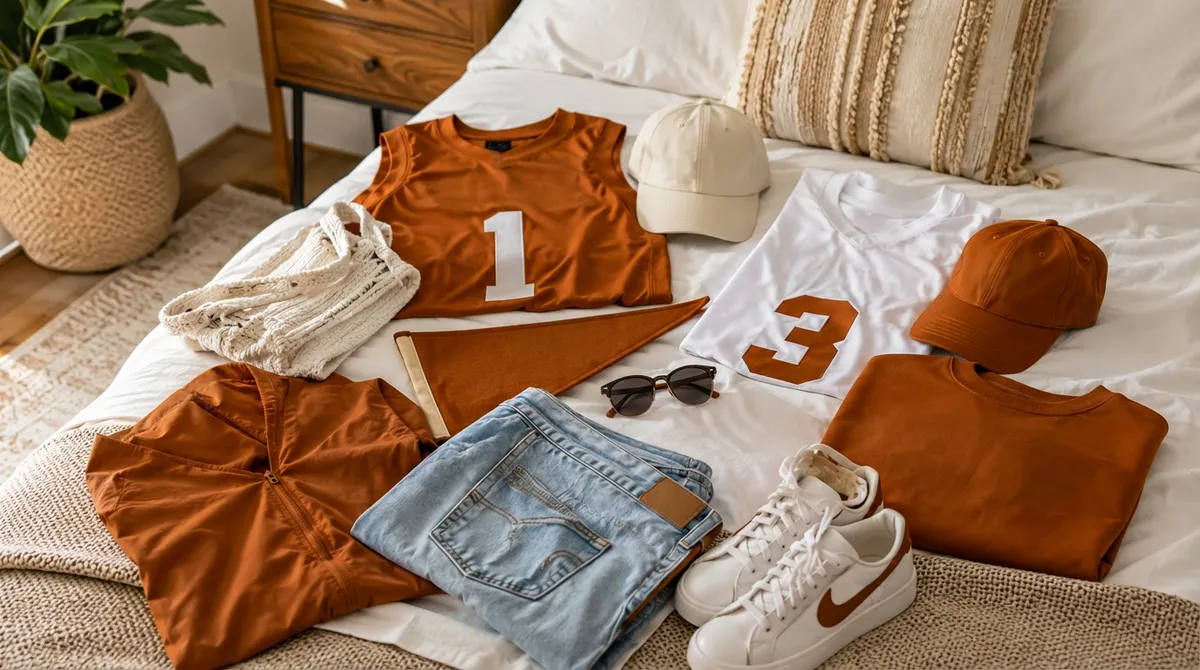
A budget wardrobe falls apart when every piece only works once. The better strategy is building around staples that can move from class to tailgate to casual weekend plans without looking repetitive.
That starts with simpler graphics. Manufacturers often keep costs down by using reusable vector assets and limiting decoration complexity, as shown in this walkthrough of a college-style athletic apparel design process. For shoppers, that usually means cleaner graphics offer better value than overloaded, multi-color designs that cost more and often age worse.
Buy the core pieces first
A strong budget game day wardrobe doesn’t need a pile of merch. It needs a small rotation that is effective.
-
Fitted tee: The easiest layer under denim jackets, zip hoodies, or flannels.
-
Clean sweatshirt: Better than a loud novelty top because it works on non-game days too.
-
Simple hat: Useful when the outfit needs school spirit without another giant logo.
-
Neutral bottoms: Denim shorts, straight-leg jeans, or a simple skirt do more work than themed bottoms.
A shopper looking at hats should pay attention to shape and outfit balance, because structured cap styling often changes the whole look more than another graphic tee would.
Why simpler usually looks better
Complicated merch often tries to justify itself with more. More colors, more text, more sleeve hits, more distressing, more random symbols. That can push the price up without making the item more wearable.
The pieces that get worn most are usually the ones with the least visual noise.
Cleaner designs also pair better with regular clothes. A sweatshirt with one well-placed logo can work with gold hoops, white sneakers, leather boots, or a trench. A shirt covered in graphics usually demands the whole outfit revolve around it.
A smarter wardrobe formula
Use this mix:
-
One statement piece for game day energy.
-
Two easy basics with school branding.
-
Everyday fashion staples already in the closet.
-
One accessory that ties the colors together.
That formula keeps college apparel cheap without making the wardrobe look cheap. It also prevents the classic mistake of owning lots of spirit wear and somehow having nothing cute to wear to the actual game.
Frequently Asked Questions About Affordable College Gear
Is officially licensed gear always worth paying more for
No. It’s worth more when the shopper cares about accurate branding, cleaner design standards, and consistency. It’s not automatically worth it for every item. Hats, sweatshirts, and staple tees usually justify the premium more than novelty pieces do.
How can a shopper tell if cheap college apparel will look bad after washing
Start with the fabric feel, seam quality, and print finish before buying. If the graphic already looks stiff, shiny, or slightly cracked, that’s a warning. If the shirt feels thin and twisted on the hanger, it probably won’t improve in the laundry.
Are resale apps a good place to shop for college merch
Yes, especially for vintage sweatshirts and older logo styles. The catch is condition. A shopper should zoom in on cuffs, collars, underarms, and print wear, then check measurements instead of trusting the tagged size.
What usually looks more stylish, a big logo or a small one
A smaller or cleaner logo usually gives more outfit options. Big logos can work, but they tend to dominate the look. For someone trying to stretch a budget, versatile branding is the better buy.
Is a basic tee a bad purchase
Not at all. A basic tee is often the smartest purchase if the fit is flattering and the logo placement is clean. The problem isn’t “basic.” The problem is buying a basic tee that looks generic, fits badly, and still isn’t cheap enough to excuse it.
What should a shopper skip first when money is tight
Skip trend-heavy novelty merch. That includes pieces with overly busy graphics, awkward slogans, or styling that only works for one event. A clean sweatshirt or tee will earn more wear.
How many college apparel pieces does someone really need
Fewer than most students buy. A small rotation of well-chosen items beats a drawer full of random sale finds. If each piece can be styled at least a few different ways, the wardrobe is doing its job.
What's the fastest way to make cheap college gear look better
Pair it with non-merch pieces that add shape and intention. Good denim, a structured jacket, clean sneakers, boots, jewelry, or a polished bag can pull a simple logo piece together fast. The merch should be one part of the outfit, not the entire outfit.
Stylish college gear gets easier to find once the shopper stops chasing the lowest price and starts judging fit, quality, and wearability. For more officially licensed looks with a stronger fashion point of view, browse Sassy Foot Fashion.
0 comments